
Why Tail Shape Changes Everything: Paddle vs Boot vs Curl
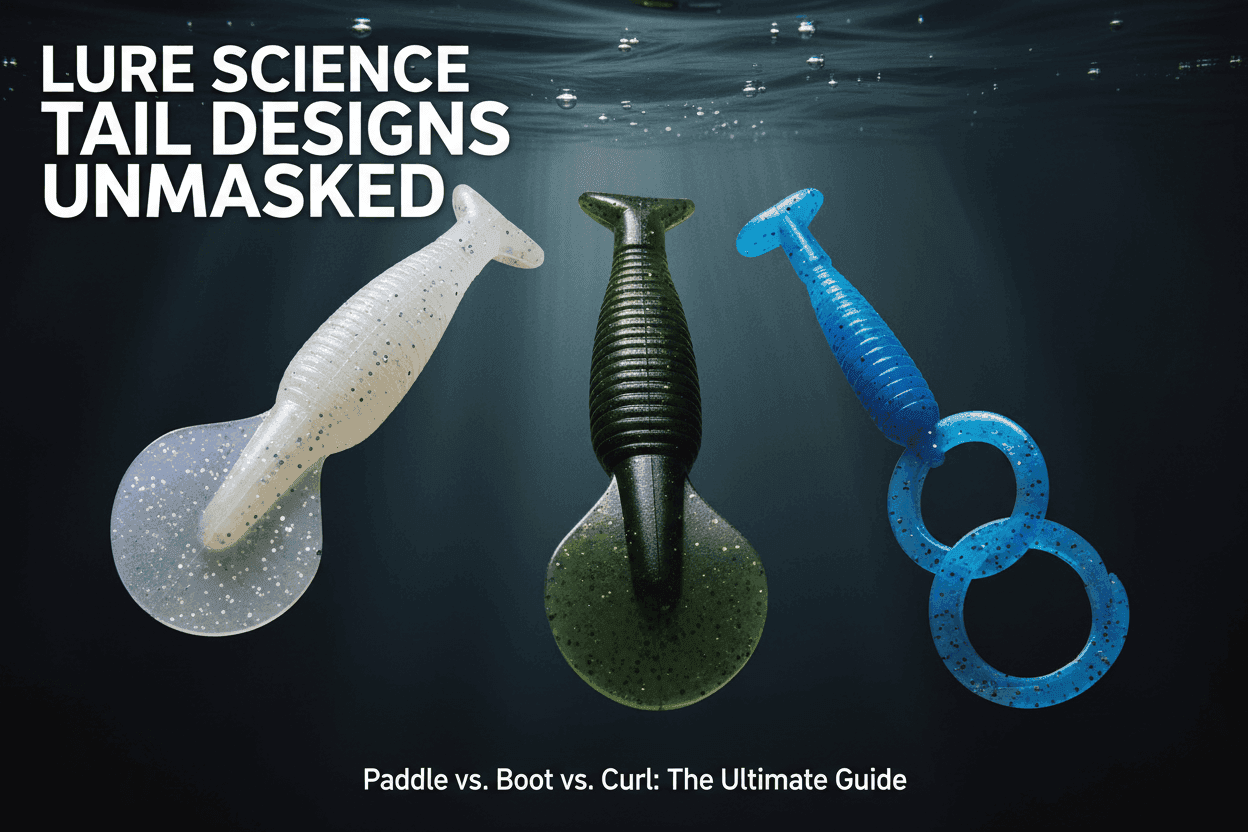
Paddle tails: the all-day swimmer
A paddle tail creates a wide, rolling thump with every turn of the reel handle. It is the most versatile profile — it swims equally well on a jighead, an underspin, or a weighted swimbait hook. Design rule: the paddle should be 0.8x to 1.0x the body diameter and angled 30° from the body axis. Go wider and the tail stalls at slow speeds; go narrower and it loses thump.
Boot tails: pressure-water finesse
A boot tail is a smaller, tighter version of a paddle — it kicks at a much higher frequency with less water displacement. This is the profile to pour when bass have seen every swimbait in the lake. Design rule: boot width at 0.5x body diameter, angled closer to 20°. The smaller surface lets the tail work at ultra-slow retrieves without mushing out.
Curl tails: the go-to rescue
A curl tail produces a tight, high-frequency vibration at any retrieve speed — even a dead-slow drag across the bottom. It is the bait that never fails when fish are inactive. Design rule: the curl arc should be 270° (three-quarters of a circle) and tapered from the base to the tip so the thin tip flutters independently.
Pouring a mold for a custom tail
The tail is the hardest part of any mold to get right. Start by sculpting the tail in clay or 3D-printing it at 1.2x scale, then scale down for the cavity. Pour a test bait, rig it on your go-to hook weight, and swim it in a clear container of water before you commit to a production mold. If it does not swim right at the kitchen sink, it will not swim right on the lake.