Open-Pour vs Injection Molds: Which Should You Start With?
The two formats, in one paragraph
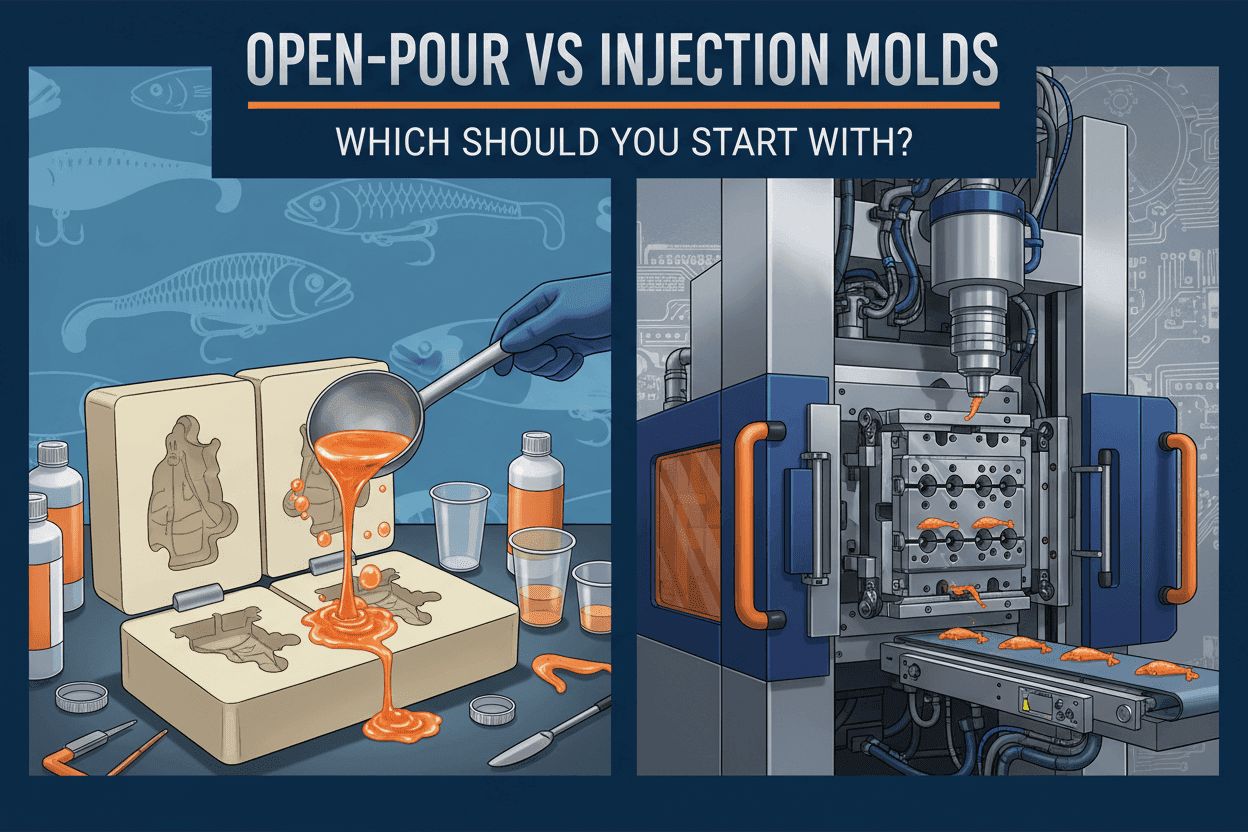
Open-pour molds are flat aluminum plates with bait-shaped cavities on top. You pour hot plastisol directly into the exposed cavity. Injection molds are two-piece clamshells; you inject plastisol through a sprue under pressure. Open-pour is simpler, cheaper, and faster to learn. Injection gives you cleaner seams, tighter detail, and finished baits with no top-flat side.
Why open-pour wins for your first year
An open-pour mold has zero moving parts, and you can see exactly what is happening inside the cavity while you pour. If you get a bubble, you can poke it with a toothpick and re-pour before the plastic gels. Injection molds hide the pour from you — a bad shot wastes a full bait and you find out 60 seconds later when you crack the clamshell.
When to graduate to injection
Move to injection when your open-pour production feels slow and you find yourself wanting round, seamless profiles — craws, creatures, and full-body swimbaits. You will also want to upgrade if you ever plan to sell baits, because buyers expect the clean three-dimensional look that only injection can produce.
Budget comparison
Expect to pay $40–$90 for a quality open-pour mold and under $20 in consumables to get started. A production-grade injection mold runs $120–$300, and you will also need an injector ($50–$150) and a real heating rig. Start open-pour; invest the savings in extra plastisol and colorants so you can practice more.