Your First Soft-Bait Mold: A Beginner's Setup Guide
The minimum viable bench
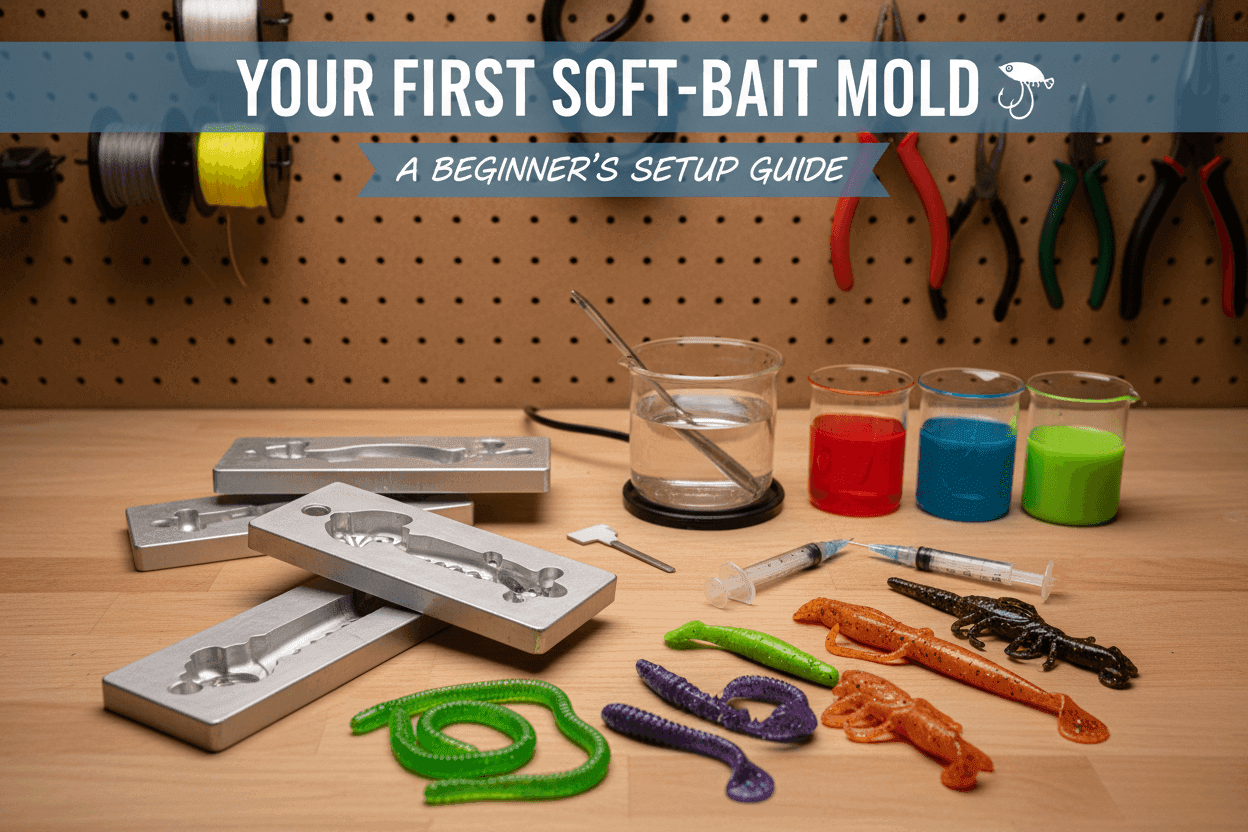
You do not need a full workshop to start pouring. My first setup was a $15 Pyrex measuring cup, one 5" stick-worm mold, a quart of medium plastisol, a digital thermometer, a pair of silicone gloves, and a microwave I stopped using for food. Total damage: under $80. I poured 40 worms that weekend.
Pick one mold, not ten
The temptation when you start is to buy six molds in different profiles. Resist it. A single 5" stick-worm (senko-style) mold teaches you every skill you need: heat control, pour speed, de-bubbling, demolding. Get comfortable with one mold before you expand — the techniques transfer directly.
Safety is non-negotiable
Molten plastisol sits around 325–350°F. A splash on bare skin is a real burn, and the fumes are irritating if your workspace is not ventilated. Always wear long sleeves, safety glasses, and nitrile or silicone gloves. Pour near an open window with a small fan pushing air outward. Never heat plastisol over a direct flame — microwave or induction only.
The shortcut list
Buy aluminum molds, not resin or silicone, for your first purchase. Aluminum transfers heat evenly, pops baits out clean, and lasts a lifetime. Skip "beginner kits" that bundle a cheap mold with overpriced plastisol; you will outgrow them in a week. Order your base plastisol in a 1-gallon jug from a dedicated supplier, not a fishing-shop repack.