
Eliminating Bubbles: Temperature and Pour-Speed Tricks
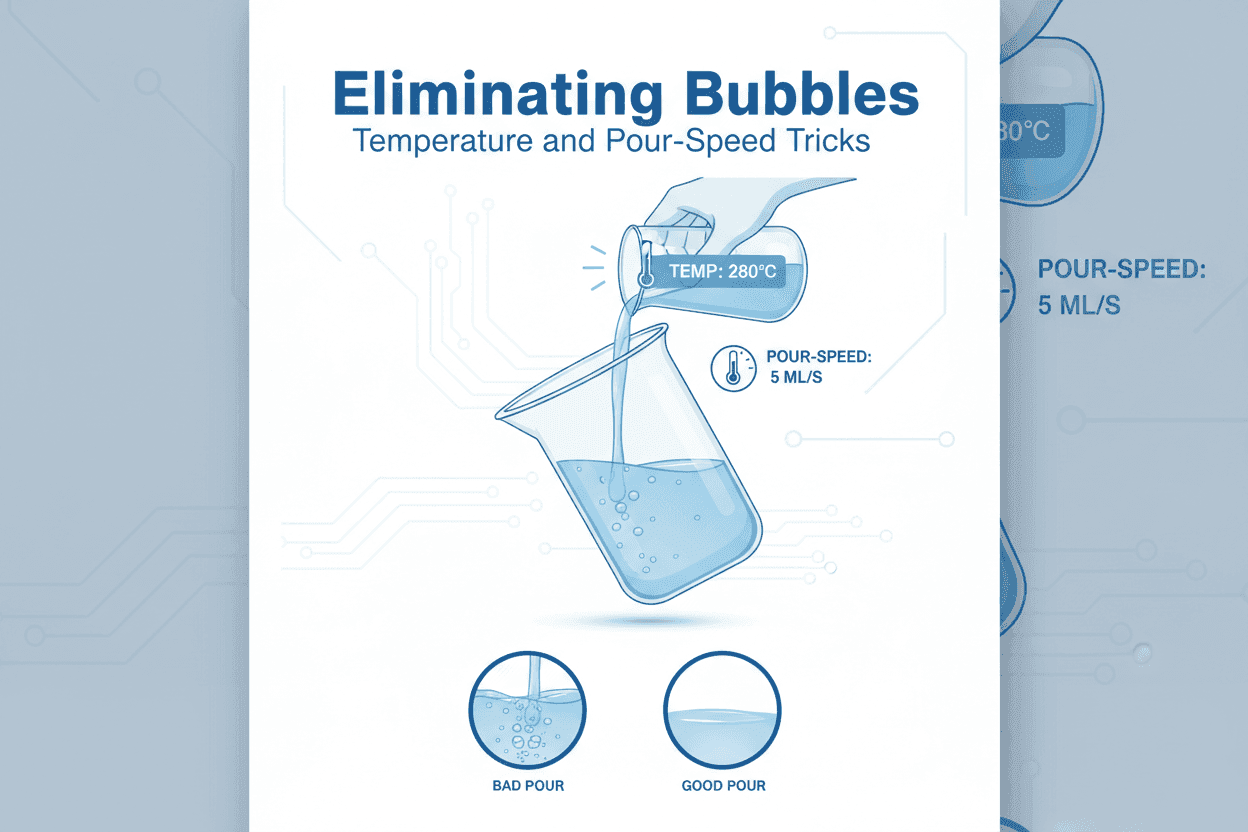
Bubbles come from three places
Undercooked plastisol traps moisture. An over-fast pour entrains air. A cold mold flash-sets the plastic against the cavity walls and traps whatever was already there. Fix all three and your bubble problem disappears overnight.
Heat to the right number, not "until it looks clear"
Plastisol is ready when it is fully transparent with a slight amber tint. For most base resins that lands at 340–350°F. Under 325°F you get a cloudy, milky pour that will have micro-bubbles throughout. Stir gently with a bamboo skewer while heating in 30-second microwave bursts — do not whip air into it.
Pre-warm your molds
A room-temperature aluminum mold at 70°F is a bubble factory. Place your mold on a heating pad at "low" for 10 minutes before the first pour, or set it on top of an upside-down mug of hot water. You want the aluminum around 110–130°F. Never pour into a cold mold.
Pour speed and angle
Pour in one continuous stream from about 2" above the cavity. Do not pour fast — a slow, steady ribbon gives trapped air a path to escape out the top. If you still see surface bubbles after the pour, tap the mold firmly on the bench three times or lance them with a toothpick within the first 5 seconds.