
Dialing In Your Plastisol Recipe: Base, Softener, and Hardener
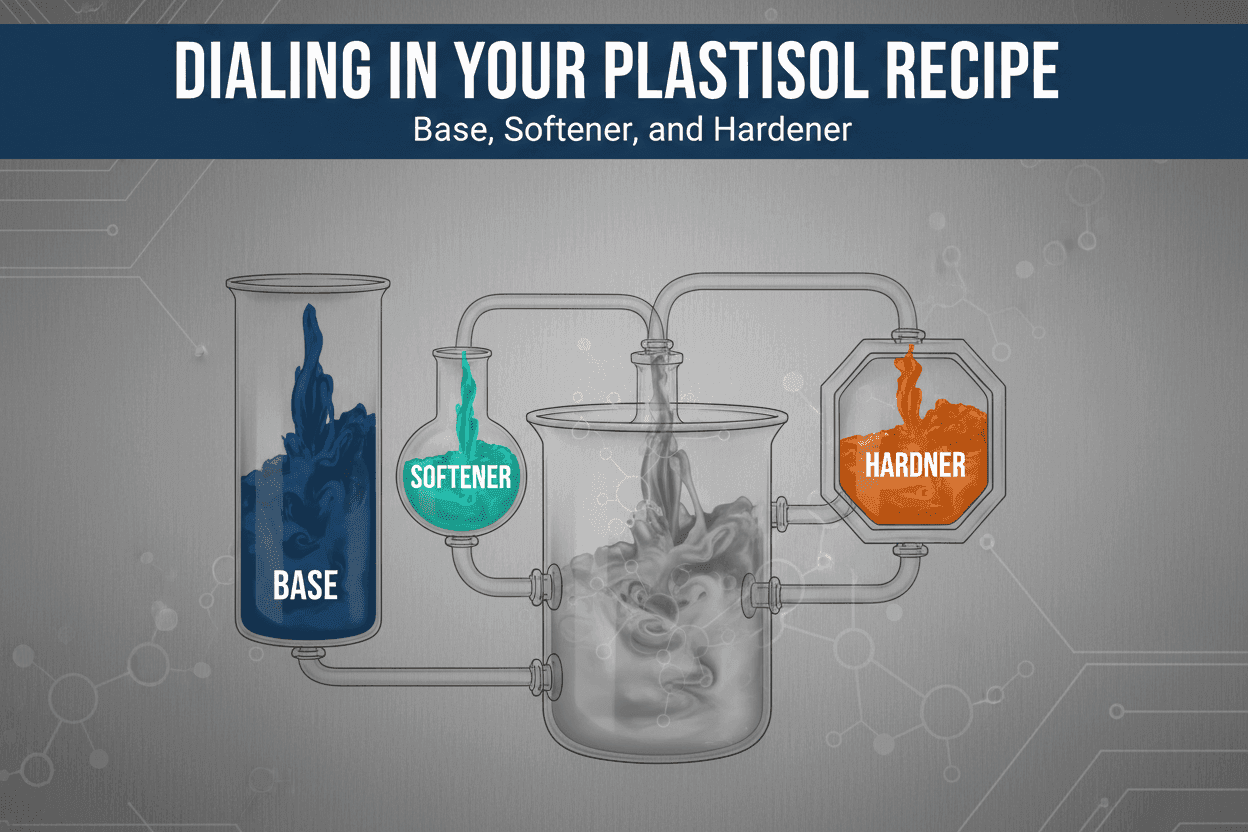
What the three components actually do
Base plastisol is PVC resin suspended in a plasticizer. Out of the bottle it lands around a medium hardness — roughly what a store-bought senko feels like. Softener adds extra plasticizer and dials the bait toward finesse / hand-poured feel. Hardener adds a stabilizer that tightens the matrix for flipping, swim-jig trailers, and anything that needs to hold up to hook sets.
The ratios I actually use
Finesse drop-shot worm: 1 cup medium base + 2 tablespoons softener. Stick worm (senko copy): medium base, straight, no additives. Flipping craw or beaver: 1 cup medium base + 1 tablespoon hardener. Swimbait body: 1 cup medium base + 2 teaspoons hardener. Measure by volume, not by eye — small differences matter.
Color and glitter go in last
Add colorant and glitter after the plastisol is fully heated and clear, not before. Dry pigments scorch if microwaved from cold. Liquid colorants go in at 2–4 drops per cup for subtle tones and 8–10 drops per cup for opaque colors like chartreuse and white. Glitter goes in at roughly 1/4 teaspoon per cup for "flecks" and 1 teaspoon for "flake."
Label every bottle
Once you start tuning recipes you will forget which is which in 48 hours. Buy a roll of painter's tape and write the base + additives on every bottle with a Sharpie. Future-you will thank you the next time you sit down to pour.